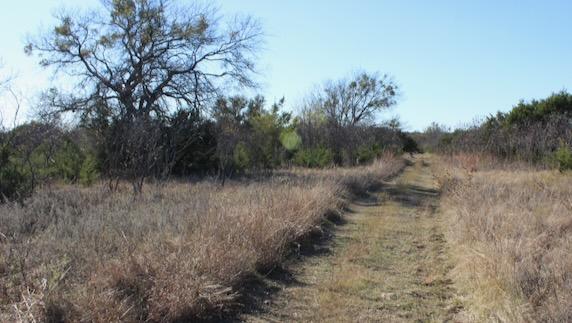
The Texas Agricultural Land Trust will host a trail run benefiting TALT at the Fall Creek Ranch near Granbury on Jan. 31. Photo by Michael Smith.
Texas is a huge state with 268,596 square miles of prairies, desert, forests, wetlands, mountains, farms, cities and highways. The natural areas are shrinking, particularly when the land is subdivided and developed. How do we protect what remains of Texas’ wild places when almost all of it is privately owned?
One of ways land is protected is through land trusts.
Among the organizations that work with landowners to create conservation easements and offer technical expertise is the Texas Agricultural Land Trust (TALT).
The nearly 20-year-old nonprofit has grown into the largest state-based land trust in Texas.
On Jan. 31, TALT will host a trail run at the Fall Creek Ranch in Granbury called Run for the Range.
THE STATE OF TEXAS’ WILD PLACES
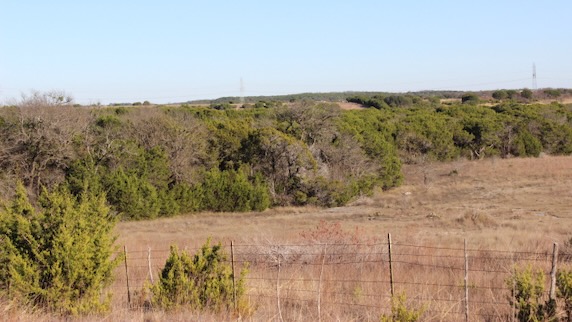
When it became a state, Texas owned a large expanseve of public land. After 1845, most of it was sold to support the new state and attract settlers and construction. As a result, less than 5 percent of the land is now publicly owned. Most of the land that gives Texas ecological value, food, wildlife, clean air and water, is privately held.
And so, if nature is conserved in Texas, it will largely be done by ranchers, farmers and other private landowners. And yet, the economics of running a ranch or small farm are very difficult, and Texas’ sprawling population tempts landowners to sell to developers, a strategy that can bring far more income than working the land ever would.
On the other hand, a great many of these landowners love their land and natural resources. They may have grown up on the land and call it much more than a business — it’s home. Many of these folks are making plans to keep their land intact, using a voluntary legal strategy called a conservation easement.
It is essentially a promise not to develop or subdivide the land, to maintain the agreed-upon part of it in a healthy natural state while still being able to use the land much as they always have. Owners can sell the land, but the easement must be part of the deal, honored by the buyer. In return, the landowner gets some financial compensation or tax benefit. To do this, they need a partner, and land trusts fill that role.
TALT FOUNDERS
TALT was created in 2007 through the efforts of three founding partners: the Texas and Southwestern Cattle Raisers Association, the Texas Wildlife Association, and the Texas Farm Bureau.
TALT is proud that they were “created by landowners for landowners.” It is headquartered in San Antonio, with activities all over the state. They work with the owners to assess the condition of their land and do all the legal work required for conservation easements. And they make annual visits to see how the easement is going and offer input and support.
Their website tells us that “Texas’ privately-owned farms, ranches and forestlands account for 139 million acres, about 81 percent of the state.” Over a million acres of those working lands have been converted to other uses since 1997, according to their website. They note that this loss is happening faster than in any other state in the nation.
Their mission is “to conserve the Texas heritage of agricultural lands, wildlife habitats and natural resources.” Pursuing this mission, TALT’s conservation easements have protected 314,268 acres, across all 10 of Texas’ ecoregions.
TALT’s 2025 annual report shows the recent year’s revenue as $28,414,771 (mostly from contributions of conservation easements) and expenses of $23,433,979 (mostly from purchases of conservation easements).
OTHER LAND TRUSTS
There are numerous other land trusts in Texas, many of which can be seen at the Texas Land Trust Council website. Together, they help conserve working lands as well as other natural areas. They provide technical assistance for keeping some places wild, restoring other places to a more natural condition, and educating us about Texas’ natural heritage.
• The Trust for Public Land reports that they have preserved over 43,666 acres in Texas. Their work focuses on everything from parks to green schoolyards and hiking trails.
• The Texas Land Conservancy works with private landowners as well as communities and governments to conserve natural areas. Their website notes that they protect 213 Texas properties totaling 168,069 acres.
• The Native Prairies Association of Texas is a land trust “dedicated to the conservation, restoration, and appreciation of native prairies, savannas, and other grasslands in Texas.” They protect, either through ownership or conservation easements, 5,749 acres.
AG LAND TRUST
So what makes an agricultural land trust different from any other land trust? Kacie Hatsfelt, communications manager for TALT, told me that it’s really “the type of land or landowner you’re going to work with.”
She emphasized that these are folks who want to keep the land as working land, as ranches and farms that continue to raise cattle or grow crops while also conserving natural plant communities and wildlife.
The places and people who have partnered with TALT include the 11,465-acre Miller Ranch in the Trans-Pecos and the 632-acre Durst Lake property in the Piney Woods whose timber production coexists with wildlife along the Angelina River. And there’s also the Fall Creek Ranch near Granbury.
FALL CREEK RANCH
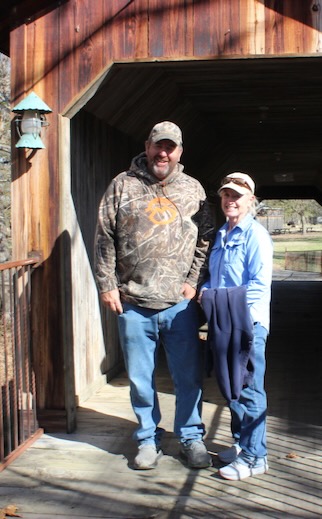
Fall Creek Ranch includes about 1,500 acres of prairie and pastureland, woodland and of course Fall Creek and its tributaries. It has been in the Langdon family for five decades. Joe and Karen Langdon have lived there since January of 1980 in the original ranch house, and their two sons each have homes on the property.
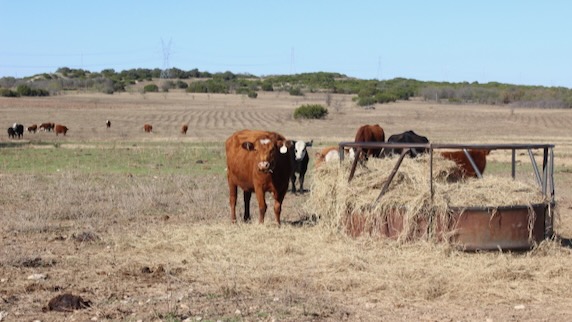
They run cattle on the ranch, but as Karen noted, “It’s hard for a couple to make a living off a place this size.”
And so she used to board horses as a part of the business. And then about five or six years ago they added a wedding venue. The younger son, Kelly Langdon, offered the ranch as a place for a cousin to get married. Everyone thought the setting was wonderful, and so the family converted a barn and built a chapel to offer the peaceful, rural site for others’ weddings.
The other part of the ranch operation is a deer lease in a more wooded part of the ranch. All of this helps make it possible for the Langdons to continue living on the ranch that they love. They watched the rural land around Granbury get sold and carved up for housing development and wanted to make sure that this did not happen to their land.
“It’s too pretty a place to cut up and make another strip mall or housing development,” Kelly said. Unfortunately, not everyone feels that way. “Our neighbors just sold their ranch (to developers) for $90,000 per acre.”
The Langdons heard about TALT and invited its CEO, Chad Ellis, to come visit. Kelly said that they felt like they were “talking with old friends,” and soon they were working on a conservation easement. About a year later, Kelly was asked to join the board of directors.
“Once a year they’ll come out,” on a monitoring visit, he said. “It’s pretty laid back.” They may make recommendations, but they prefer to let landowners manage the land.
Kelly and Karen talked about the common misperceptions landowners may have. Some think that the easement will mean that they cannot use their land or ever sell it. But the agreement only restricts whatever the owner voluntarily agreed to as part of the easement, and parts of the land can be excluded from the easement so that they are not affected by it. The land can be sold, but a new buyer is bound by the terms of the conservation easement.
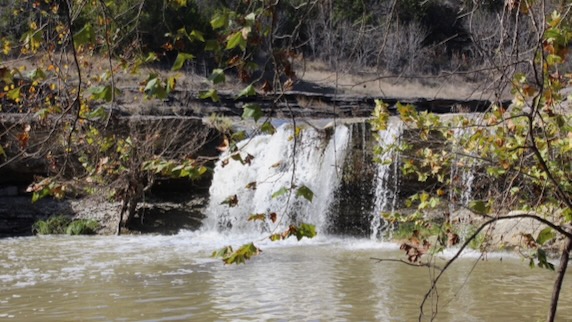
On the Fall Creek Ranch, the wedding venue is considered a commercial enterprise, so that small portion is not in the conservation easement. The main part of the agreement is that it will not be subdivided and will not be developed. As they discussed possible future uses, they set aside a few “building envelopes” which are places where some future building (e.g. a house or barn) could take place.
The Langdons have three pastures in non-native grasses like winter wheat or coastal Bermuda, totaling about 100 acres, and this is not prohibited under their easement. That leaves nearly 1,300 acres in native rangeland, and those acres will be maintained. Grazing cattle are periodically rotated between areas so that each grassland has an opportunity to rest and re-grow.
For those who would like to see the ranch and support conservation, on Jan. 31, TALT will host a trail run at the Fall Creek Ranch. Participants can sign up to run (up to a half-marathon). Nonrunners can participate in the “couch conservationist” category. Called Run for the Range, there will be a live band, food and trails mapped out for the run.
Run for the Range
Hosted by: Texas Agricultural Land Trust, the largest state-based land trust in Texas. The 5K, 10K and Half Marathon runs benefit TALT.
When: Jan. 31, 2026 at 8 a.m.
Where: Fall Creek Ranch, 8220 Langdon Leake Ct, Granbury
Entry Fees: $50-$90
Website