
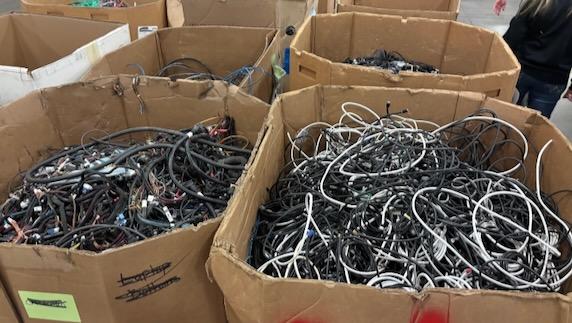
Boxes of cable and wiring await processing at URT. Photo by John Kent.
Wherever you are, take a look around the room. Your eyes are likely passing across all manner of electronic gizmos — a smartphone here, a TV there, a coffeemaker, a refrigerator or a printer. And don’t forget the screen right there in front of your face. Here in the 21st century, it all seems indispensable. But none of it lasts forever, and at some point you have to put it out to pasture. The question is, will that pasture be a landfill?
The answer usually is yes. According to PIRG, the average American family generates about 115 pounds of electronic waste each year, with the entire United States’ output at around 70 million tons. More than 80 percent of it goes to landfills.
Figures like that can certainly invite pessimism. But as Albert Einstein once said, “In the middle of difficulty lies opportunity.”
Nestled anonymously in an industrial district just off Interstate 35 on Fort Worth’s North Side is the largest electronics recycling operation in the Southwestern U.S. Universal Recycling Technologies, better known as URT, processes more than 10 million pounds of electronic waste per year in the sprawling plant at 2645 Sylvania Cross Drive. Its mission is to reuse, repurpose or recycle everything that comes in, so that almost nothing is left to throw away.
“The amount of material we send to the landfill is very minimal,” said URT business development manager Jon Wall.
That’s saying something. Because the variety and sheer volume of e-waste that enters the facility is staggering. During a recent group tour of the 198,000-square-foot plant, we saw scores of strategically placed bins, each one piled to the top with a different cache of defunct electronic gear: flat-screen TVs, fluorescent tubes, electronic circuit boards, cellphones, batteries and printers. There were orderly stacks of used and brand-new (never sold because of a manufacturing flaw) air conditioning units, as well as refrigerators, solar panels, great mounds of electrical wiring, VHS tapes, old-school cathode-ray-tube computer monitors and many other used-up products, either whole or stripped out of some device, ready to be processed.
FIRST INSPECTION
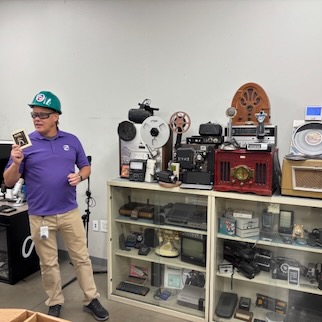
Much of the stuff arrives in 18-wheelers, mainly from businesses, banks, school districts, manufacturers, nonprofits and local governments. It is then logged, inspected and verified to ensure traceability, then sorted meticulously and prepared for processing.
For discarded computers and computer peripherals, that can involve bench-testing and evaluation, either for resale or parts harvesting. Central processing units pulled from computers, for example, are among components that URT can resell in large lots. (The company moves much of its merchandise on popular e-commerce sites like eBay, Amazon and Facebook Marketplace.) URT also wholesales used hard drives, but only after all data is removed or “wiped,” one of the many strict security protocols the company mandates. Top international customers for such repurposed products include Canada, Romania and Dubai. However, a significant percentage of URT’s customers — banks in particular — require their retired hard drives to be shredded, a service URT also offers
SORTING IT OUT
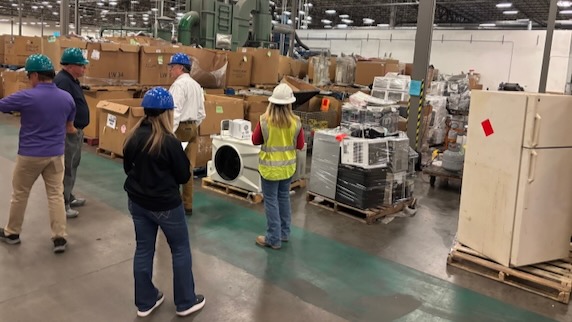
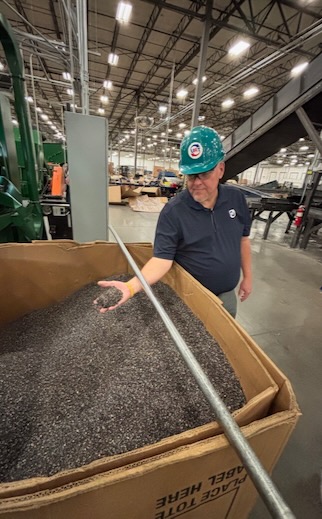
Positioned across the company’s vast factory floor in Fort Worth is a large array of complex, state-of-the-art, highly specialized machines that would make Rube Goldberg blush. Some shred and some sort. Some do both. One apparatus uses specific saltwater concentrations to float various plastics and determine the density of each. A result of the process is the separating out of desirable single-polymer plastics, which are then shipped to a company that converts them to pellets, then sells the pellets to manufacturers. Plastics recycling is a big part of URT’s daily operations, as the cases, structural components, wire insulation and other parts within modern electronics are plastic-intensive. In addition to sorting by chemical compound, URT also employs an advanced optical sorter that can separate plastics by color, thus tapping into a different resale market.
MATERIALS MINING
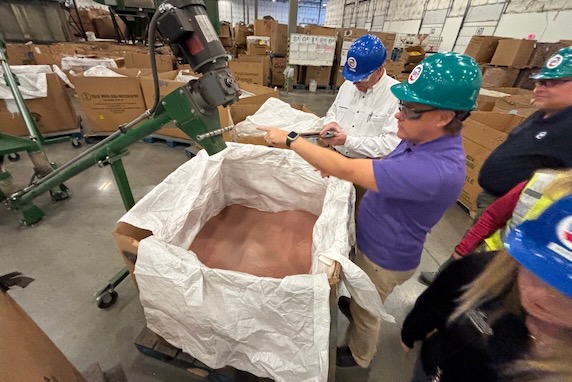
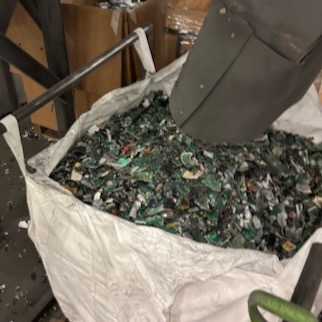
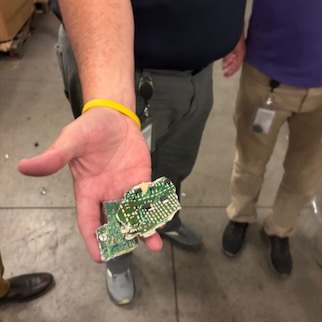
Other e-waste, like electrical wiring, can be fed into the “copper chopper,” a machine that strips off plastic insulation and shunts the resulting powdery copper into bins. The metal is then sold to smelting operators. (The insulation is saved, too. The company is in the process of finding a downstream use for it.) Smelters also buy gold, lead and other commodities recovered from electronic circuit boards, which undergo their own specific shredding and separation process. Another machine employs a magnetic sorting belt to ferret out ferrous metals for recycling. Refrigerant is recovered from air conditioners and refrigerators. Solar panels yield precious metals like silver, as well as aluminum and recyclable glass. Mercury is extracted from fluorescent lights. Glass from cathode-ray tubes is crushed into powder and shipped to Brazil, where a company bakes it into floor tiles. Batteries are packaged to federal transportation specifications and shipped out to battery processors. Even the cardboard boxes in which the recyclable items arrive is recycled.
AUDITING
URT refers to its recycling and reuse model as “lifecycle solutions,” wherein every item is evaluated for its optimal outcome. The term “circular economy,” referring to an economic system based on the reuse and regeneration of materials or products, was referenced repeatedly during our tour. Wall said the company is focused on making sustainability “the result of doing things right.”
All material shipped out of the plant is traced and reported to ensure validation of its intended downstream use — which, in addition to establishing a complete port-to-port record, can serve as a hedge against potentially dishonest recycling brokers who might otherwise divert the e-waste unethically: to rivers, lakes, oceans, dumps or unsafe employers.
“We audit [the shipments], or we hire an auditor,” he said.
PEOPLE POWER
Despite the Fort Worth plant’s machine-forward vibe, URT does employ actual people — about 100 at its Fort Worth operation, according to company officials, with additional hires anticipated. When material arrives at the facility, some of the initial work involves “de-manufacturing,” in which whole products are disassembled into constituent components that are either recycled or prepared for resale. Such tasks often require the human touch.
“While automation handles much of the heavy lifting, skilled technicians are essential for data destruction, safe disassembly and quality control,” Wall said. “Their expertise ensures each asset is handled securely and directed toward the most valuable and sustainable end-use.” Because toxic substances such as lead and mercury are present in many of the products that URT processes, workers are required to wear personal protective gear to prevent direct exposure.
In the past, individual citizens have been allowed take advantage of URT’s recycling services through a customer drop-off program. However, according to the company's website at press time, the program is temporarily suspended.
Wall said. “We also partner with local businesses and OEMs (original equipment manufacturers) to host collection events throughout the year.”
FULLY CERTIFIED
Headquartered in Janesville, Wis., URT operates a total of four electronics-recycling plants: in Janesville and Fort Worth, and in Clackamas, Ore., and Dover, N.H. Wall said that while there are multiple electronics recyclers across Texas, only a handful meet the highest certification and compliance standards — a mix of federal, state and international regulations focusing on proper disposal, data security and environmental protection.
“URT is among the few that provide fully certified, end-to-end lifecycle solutions,” he said.