
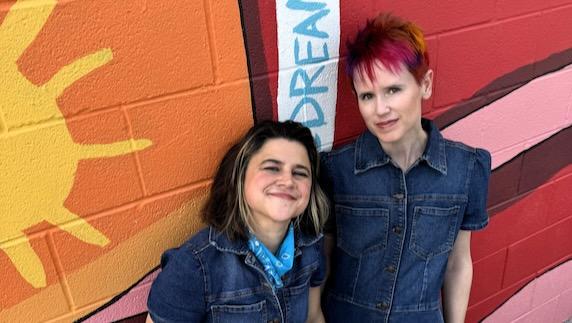
Vanessa Barker and Taylor Willis, co-founders of the Welman Project, are preparing to move to a 25,000-square-foot building — five times the size of their current location. Photo courtesy of the Welman Project.
Back in 2020, Alheli Torres was working as an assistant special-education teacher in Crowley ISD, when her lead teacher unexpectedly left in the middle of the year. Right away, Torres was picked to fill the position. She knew she would have to scramble to get her classroom together.
“I needed all kind of supplies and books for the kids,” she said. “I posted an online message on Facebook asking for books, and somebody replied, ‘Have you heard about the Welman Project?’ I didn’t know how this simple post was going to save me in so many aspects.”
With its guiding philosophy of “fill a classroom, not a landfill,” the Welman Project tackles two problems at once — waste disposal and under-resourced schools — and has established itself as the go-to solution for educators in need of classroom and art supplies. Free supplies, all recycled or reusable, donated by more than 60 DFW-area businesses and organizations.
Now, a decade into its existence, the growing nonprofit is shedding its original location at 3950 W. Vickery Blvd. for a space five times larger: the historic Kimbell Milling Company building at 2109 S. Main, which until recently looked to be on a collision course with the wrecking ball.
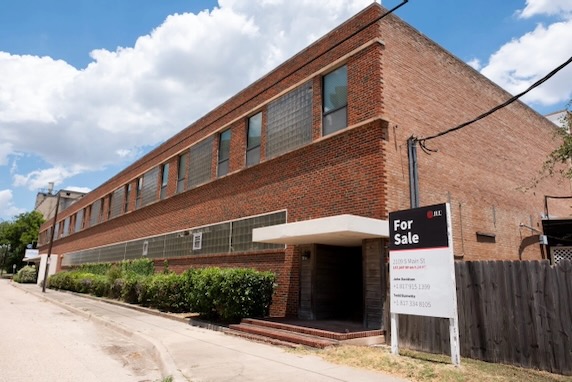
“While we love our current space, demand for our services has dramatically outpaced the capacity of our 5,600-square-foot facility,” said Taylor Willis, who along with her lifelong friend and environmentalist soulmate Vanessa Barker, founded The Welman Project in 2015. (“Welman” is an adaptation of Barker’s birthmother’s last name, Wellman.) “We're privileged to have found a new home in the historic Kimbell Milling Company building on South Main. For an organization built on the principles of reuse and reimagining, the opportunity to inhabit a beautiful building that was rescued from demolition is a dream come true. It’s the perfect embodiment of our core belief — that what others might overlook holds incredible potential.”
The nonprofit is deeply rooted in Willis and Barker’s devotion to environmental conservation. Since the organization began tracking its inventory in 2017, Welman has distributed more $14 million worth of goods to more than 3,400 schools and 550 nonprofits, diverting the equivalent of 1,700 dumpster loads of materials from landfills, Willis said.
TEACHERS' TREASURE HUNT
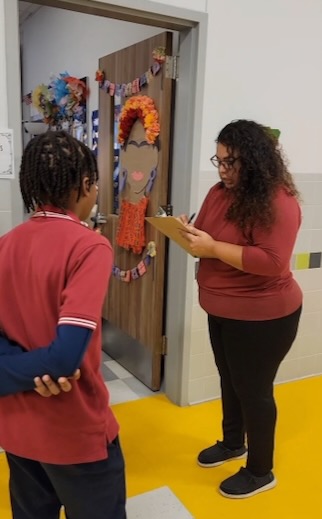
For teacher Alheli Torres, discovering Welman on that day in 2020 was like striking gold.
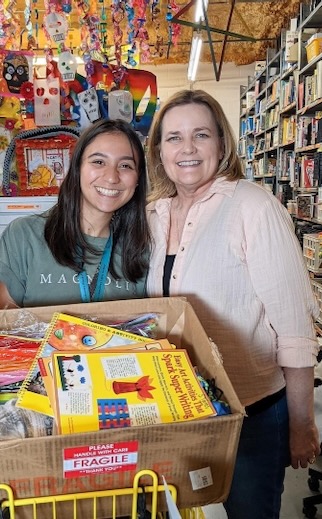
“That weekend, I went with my husband to the [Welman] warehouse not knowing what to expect. Oh, my! I came back with not only three boxes of books, but school supplies, teacher supplies and enough materials for for-fun activities,” Torres said.
It was a saving grace. With her assistant-teacher annual salary of about $17,000 still in effect, buying those items with her own money — as many teachers are known to do — was not an option.
Since that time, she’s become a Welman regular.
“The first thing I hear when I open the door is ‘Hi, Alheli! How are you?’ followed by the biggest, warmest smile. After a quick chat, I go back where the magic is, and as I'm shopping they're always asking, ‘So what are you shopping for today?’ and they will do backflips for you to find you what you need,” Torres said. “They always make me feel welcome, appreciated and supported. And in a world where teachers are underappreciated, Welman always makes me feel like a superstar.”
Torres has since moved to Harmony Science Academy in Fort Worth, where she teaches 6th-grade Spanish. She has outfitted her students with a library featuring a seating-area rug from Welman’s wide-ranging inventory.
“But the most fun things that I go for are the unexpected and unique,” she said, like seasonal decorations. “My kiddos love to walk into our room and find the ‘teacher's table’ decorated, or the little prizes and trinkets that they can win when we play games.”
The haul from Welman is amplified by Torres’ strong creative streak. Earlier this year, she shopped the warehouse for candles, fabric, paper scraps, play food, picture frames, tiny containers and 90 shoeboxes for a Dia de los Muertos shoebox altar project, now a yearly and highly anticipated event for her students.
OLD SCHOOL BEGINNINGS
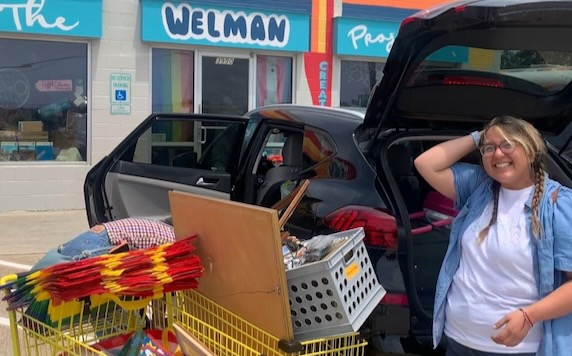
Today, the Welman Project serves more than 6,000 educators per year, but its beginnings were modest.
“When we started, it was basically just a few of us driving around picking up things in our spare time and finding teachers who could use them,” Willis said. “Now, we have three programs serving the community: a warehouse full of unlimited free materials and curriculum-enhancing creative reuse ideas for educators; our Curiosity Shop, where makers and families can get affordable arts-and-craft supplies and buy work from local artists; and a makerspace with classes for kids and adults, empowering everyone to explore their creativity through fiber arts, woodworking and more.”
Willis emphasizes that the evolution would not have been possible without a community of volunteers, generous donors and a passionate staff who all have believed in the mission and helped Welman grow.
'WONDERFULLY WEIRD LEFTOVERS'
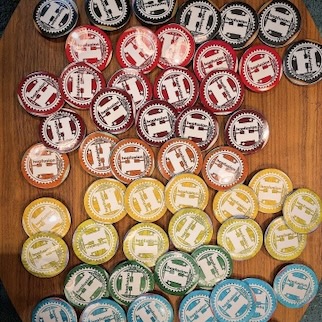
The variety of donations to Welman is expansive, from office supplies, craft materials and books, to the “wonderfully weird leftovers from the corporate world,” Willis said. “One of our most fascinating donations was a large shipment of outdated airplane components and expired airplane tape. You don't really think about tape having an expiration date, but in aviation, everything does [expire] for safety. It was still usable tape, so it was easy to give away.”
Art teachers found the unusually wide tape useful for photo-transfer projects, and the industrial components were snapped up for use by robotics and engineering students.
“That donation perfectly captures our mission: finding the potential in what would otherwise be discarded, and turning it into a tool for creativity, problem-solving and hands-on learning,” Willis said.
“One of our most fascinating donations was a large shipment of outdated airplane components and expired airplane tape. That donation perfectly captures our mission: finding the potential in what would otherwise be discarded, and turning it into a tool for creativity, problem-solving and hands-on learning,” Willis said.
Other typical contributions include event decor, manufacturing remnants, outdated branding materials, surplus inventory, furniture and old design samples. Musical instruments are on the menu, too, even big ones. In the case of a piano, which is difficult to transport, Welman will first identify a teacher who can use it, then ask the donor to cover the cost of moving it directly to the school.
“We've rehomed several pianos this way, and it's worked out very well,” Willis said.
A large share of donations comes from corporations, including design firms, manufacturers and offices that are renovating or clearing out inventory. Individuals cleaning out craft rooms or art studios also are a resource for Welman. Teachers often donate as they change subjects or retire. Donors can make an appointment on the Welman Project website, and drop off items at the Fort Worth location.
Among the most sought-after materials are writing utensils, especially dry-erase markers and pencils, and copy paper. Willis says just about any donation is useful as long as it's clean and well-organized. Large lots of the same item are especially prized.
“It's extremely helpful to get class sets of items, so if you can save up until you have 30 of something before you bring it, that makes an easy class project for a teacher,” she said.
Materials not accepted include clothes (except for costumes and bulk-surplus t-shirts), hazardous chemicals, mattresses and moldy or dirty items.
“Otherwise, we love the weird stuff!” Willis said. “Between our team and the teachers who shop, there are so many creative ideas for repurposing things most people would view as trash. It's fun for us to be challenged to come up with those ideas.”
Elementary school teachers take the biggest slice of the Welman pie, but plenty of supplies also find their way to middle schools, high-schools and even colleges.
Among the most sought-after materials are writing utensils, especially dry-erase markers and pencils, and copy paper. Willis says just about any donation is useful as long as it's clean and well-organized. Large lots of the same item are especially prized.
ENVIRONMENTAL LESSON
There’s more to Welman than just a lot of free stuff.
“First, this is an environmental solution, with businesses benefiting from tax deductions and lower waste-removal costs while directly supporting their community. Then, by providing these repurposed materials at no cost, we alleviate the financial burdens on educators in underfunded classrooms, allowing them to focus their energy and resources on teaching,” Willis said. “Ultimately, this access to unique materials fuels creativity, empowering teachers to design engaging, hands-on lessons that inspire their students.”
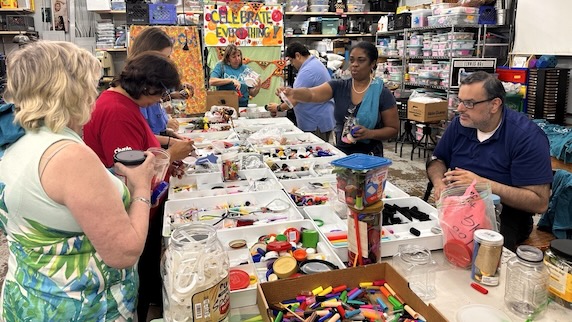
Beyond the classroom, the Welman Project’s Curiosity Shop serves artists, crafters, builders, families and all other interested shoppers by selling inexpensive creative materials and unusual vintage items. The shop allows Welman to extend its sustainability mission to the wider public, and enables a revenue stream that helps keep classroom supplies free for teachers.
Which takes us back to Alheli Torres. In 2024 she was named Harmony Science Academy’s Teacher of the Year, a recognition she claims would not have happened without the Welman Project’s resources.
“Welman has been in every project, every interactive session, our journals, games and my beloved classroom,” Torres said.
Even the bookcase displaying her Teacher of the Year award is a Welman giveaway.
GRADUATING TO A NEW LEVEL
The Welman Project’s current building will close at the end of January, then comes “a couple of months” of moving and setting up before the new space opens in the spring of 2026.
“We’re thrilled to be transforming this landmark into a vibrant hub for arts, education and sustainability, creating a space that honors its past while serving our community’s future,” Willis said.